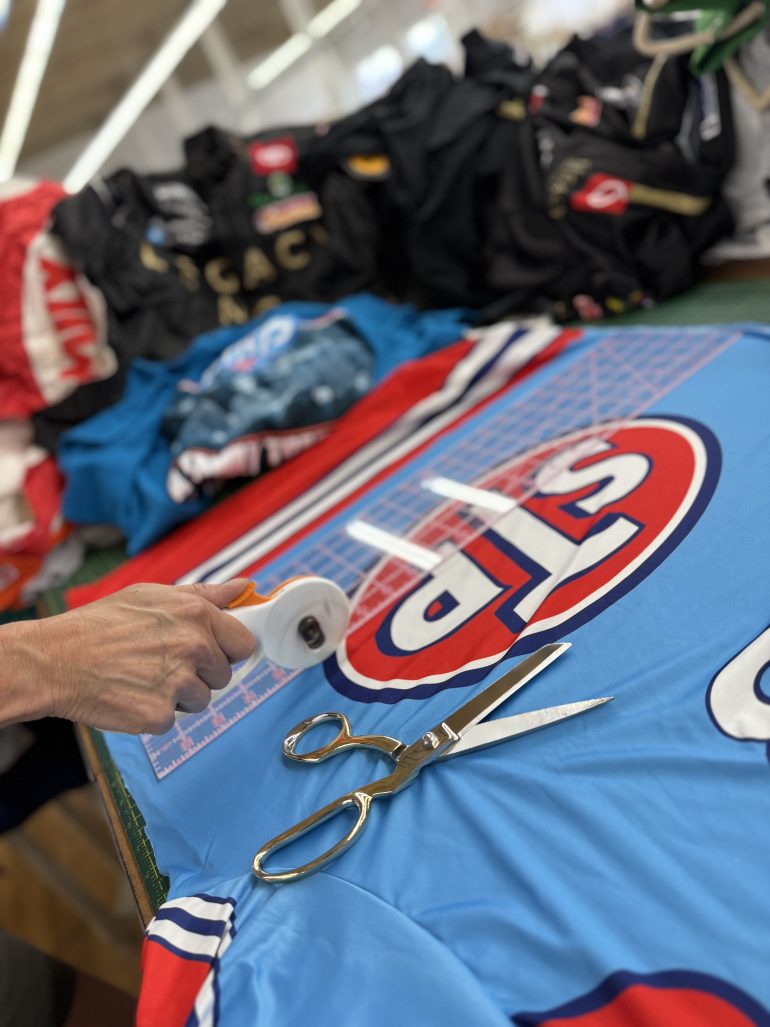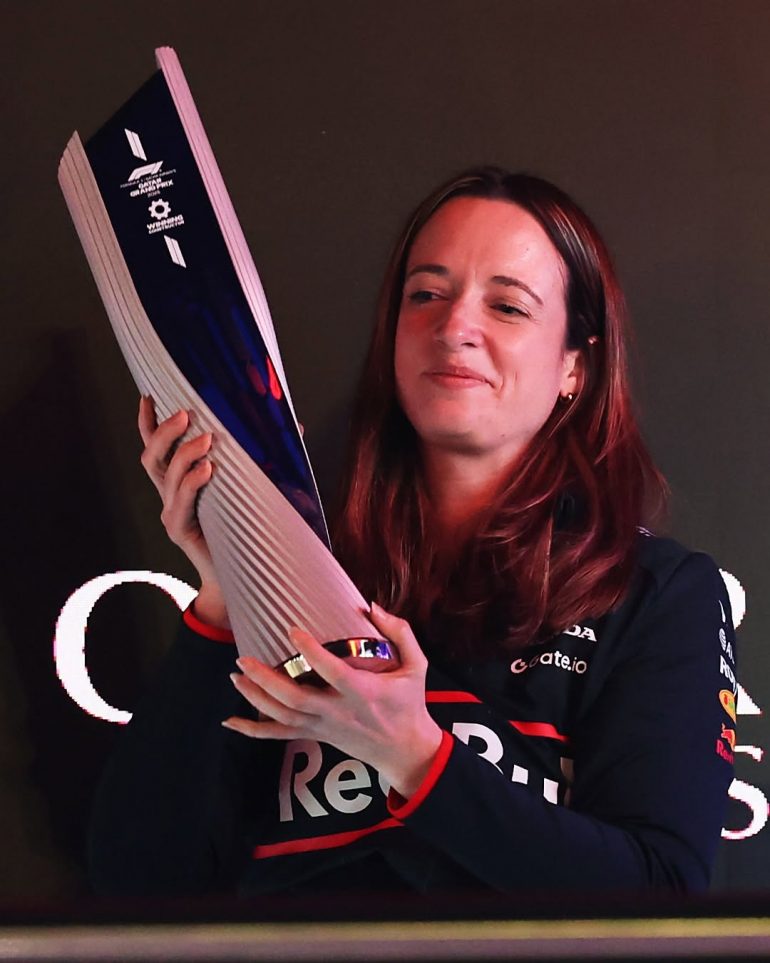
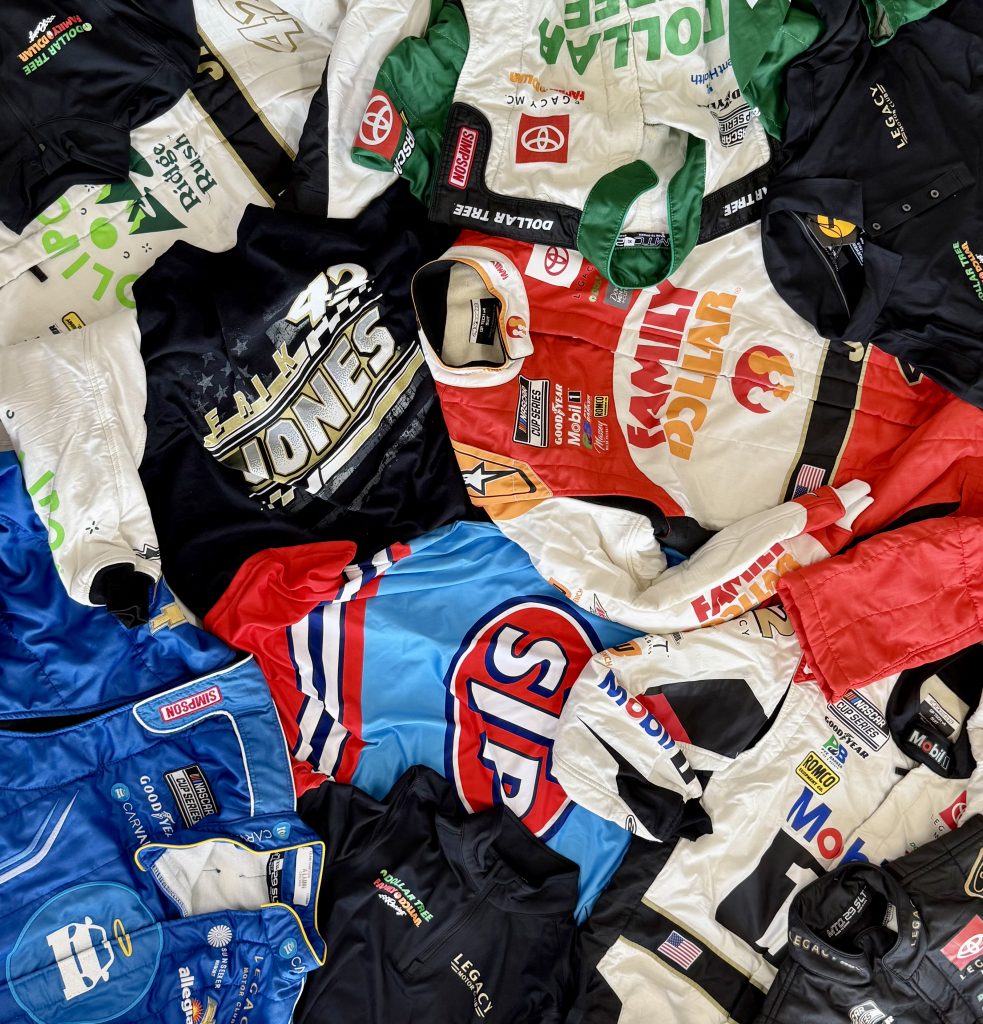
It’s not uncommon for NASCAR teams to retire their apparel at the end of every season. As partners, logos, and drivers change, fire suits and crew shirts must change as well. This dead stock can’t be reused or sold because the names and logos sewn into them belong to relationships that ended with the final checkered flag. The only option has been to send them to the shredder. Legacy Motor Club’s VP of Communications, Amy Stock, recalls thinking what a waste that was and went in search of a solution.
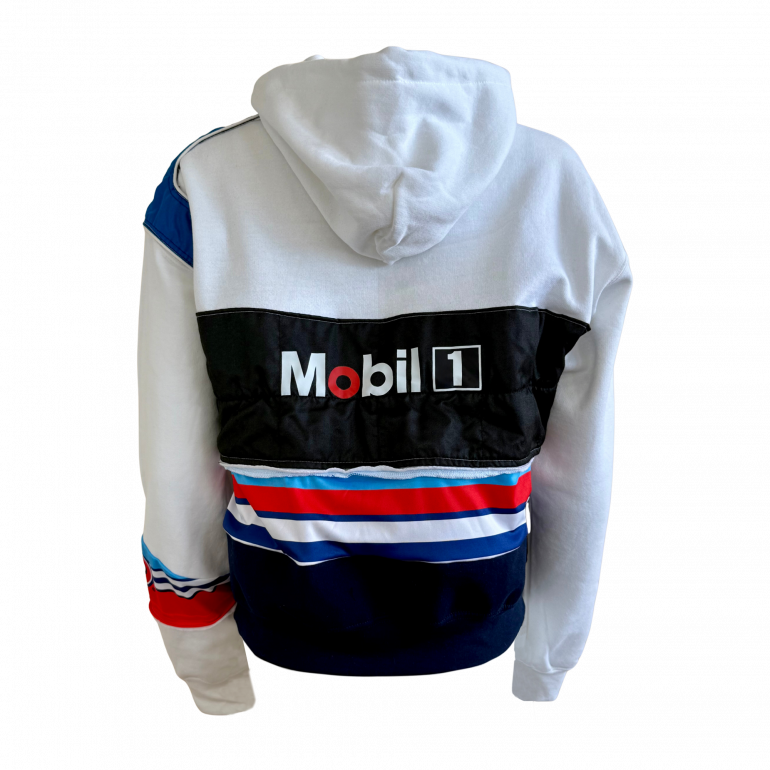
She found Refried Apparel through a podcast. The Massachusetts company had been working across professional sports, turning retired team materials into one-of-a-kind merchandise for organizations in baseball, football, hockey, and college athletics. A recent project with the Las Vegas Raiders, rebuilding traded jerseys into collectible fan pieces, seemed like a model that might work for Legacy Motor Club, so she reached out to co-owner Mark Lito to learn more.
Refried Apparel started as a personal project of Mark’s wife Lisa, who began making upcycled pieces from thrifted materials and selling at farmers markets. The response was strong enough that she and Mark decided to build a business around it. They launched at the International Surf Show in Orlando and caught the attention of an apparel industry veteran who came on as an investor. The operation grew from two rooms in their house to a three-story mill building in the textile district of New Bedford, Massachusetts, where Refried Apparel now employs a full team of cutters, quality control staff, packers, and shipping personnel, with design still led by Lisa.
Mark described a straightforward mission: “To keep usable materials and textiles out of landfills in a way that’s profitable for an organization”. Their model unlocks a new revenue stream for something that has no value and gives the consumer something different. Everything they make is a one-of-one collectable item. “It’s hard to poke holes at this model”, Mark said. “It’s a win for the environment, a win for the consumer, and a win for the organizations that get involved to support their sustainability strategies.”
That’s exactly what Amy was looking for.