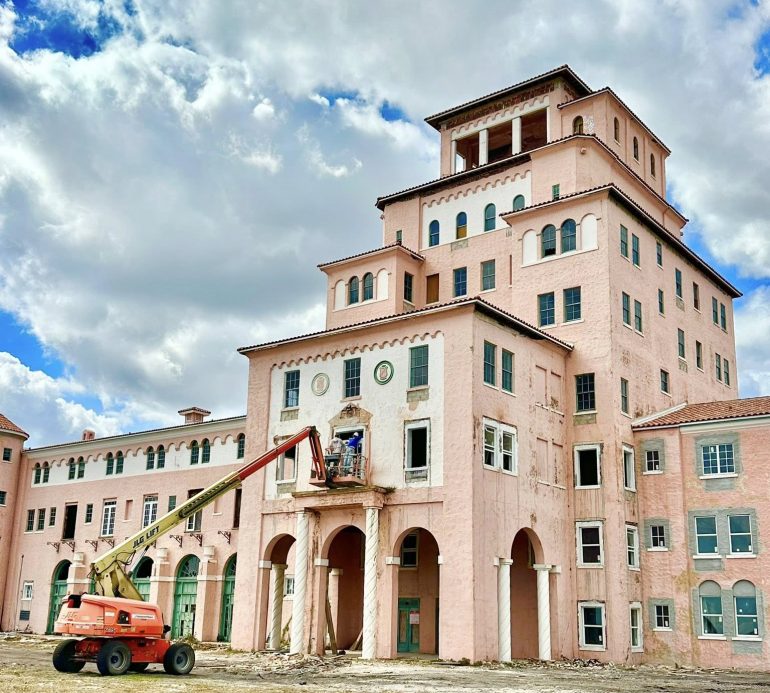
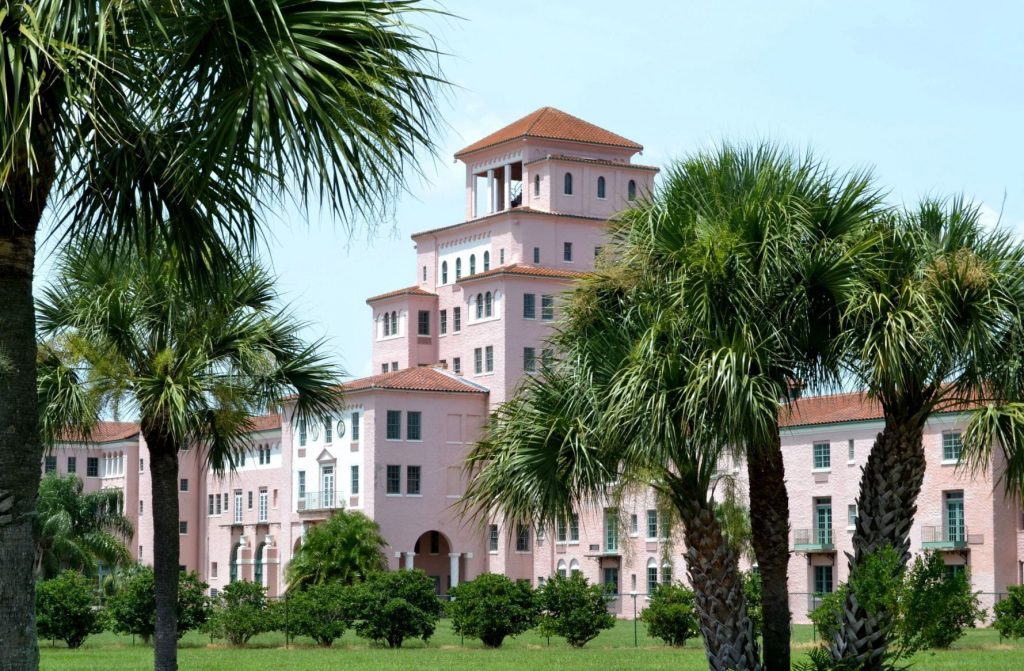
When I heard Speedwell was featuring the restoration of Harder Hall, I jumped at the opportunity to learn more about this unique project. As a 5th generation Floridian, I know there are precious few of these properties left, and I was grateful to see someone saving this one from the wrecking ball. As a kid, I spent weekends at the Fenway Hotel in Dunedin, another of Florida’s ‘pink lady’ hotels built in 1924. I’ve always appreciated that historic buildings are our most tangible connection to the past and have built my career on preserving and maintaining historically significant properties.
Robert Blackmon, the developer behind the Harder Hall project, grew up with a similar preservation mindset. Robert’s father built their home around significant architectural salvage pieces rescued from historic buildings set for demolition. Living in a home filled with a mix of old and new instilled an appreciation for historic architecture and elements worth saving.
After high school, he began working on real estate revitalization projects alongside his mother. Their first significant restoration was of a 1909 five-unit apartment building in downtown St. Petersburg. Fortunately, decades of neglect had actually preserved historic materials and finishes under layers of paint and linoleum. Rewiring, replumbing, and restoring the interiors of the entire structure to their original state won them their first preservation award. That project hooked Robert on quality and craftsmanship, giving him an understanding that the original intention of a building is almost always the best one.
Robert’s preservation philosophy became “play it as it lies,” restore what was original or replace it as closely as possible rather than trying to modernize buildings to match current trends. If there’s terrazzo under layers of flooring, restore the terrazzo. Don’t try to make things what they’re not. He refined this approach across multiple projects, always focused on staying true to the building’s as-built character.
That would prove to be difficult with Harder Hall, which had been abandoned for nearly 40 years when the Blackmons purchased it in 2022. It wasn’t a straightforward preservation project, rather a mix of preservation, renovation, and adaptive reuse. The changes they are making will enhance the building’s sustainability and safety while returning the hotel to its original purpose.
The roof was gone, the original roof tiles were destroyed, and most of the decking had collapsed. The decking was rebuilt with tongue-and-groove hardwood, and the original pitches were matched. Original roof colors and clay tiles were matched and have been recreated from old photographs. The common areas are being restored to emphasize original architectural detail and authentic materials. In the formal lobby and ballroom, they’re restoring the pecky cypress that covered the walls and ceiling beams.
Over time, the actual hotel rooms themselves have been stripped, and there’s largely nothing original left, so those will be modernized. Robert’s plans include a mix of rooms ranging from standard rooms to a suite that spans an entire floor. The hotel has never had central air conditioning but will be fully under air. Laminated impact glass replaces single panes, upping the energy efficiency for the new HVAC systems and providing a higher rating of impact protection from storms and hurricanes.
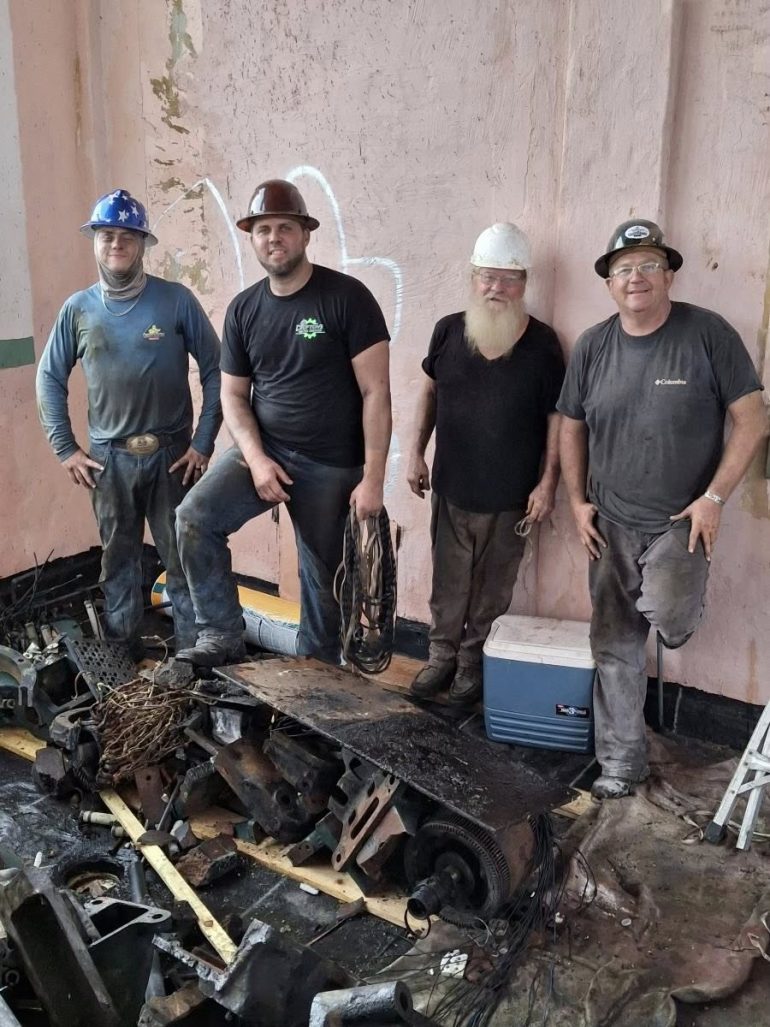
The biggest challenge was putting together the right team to do this work.